
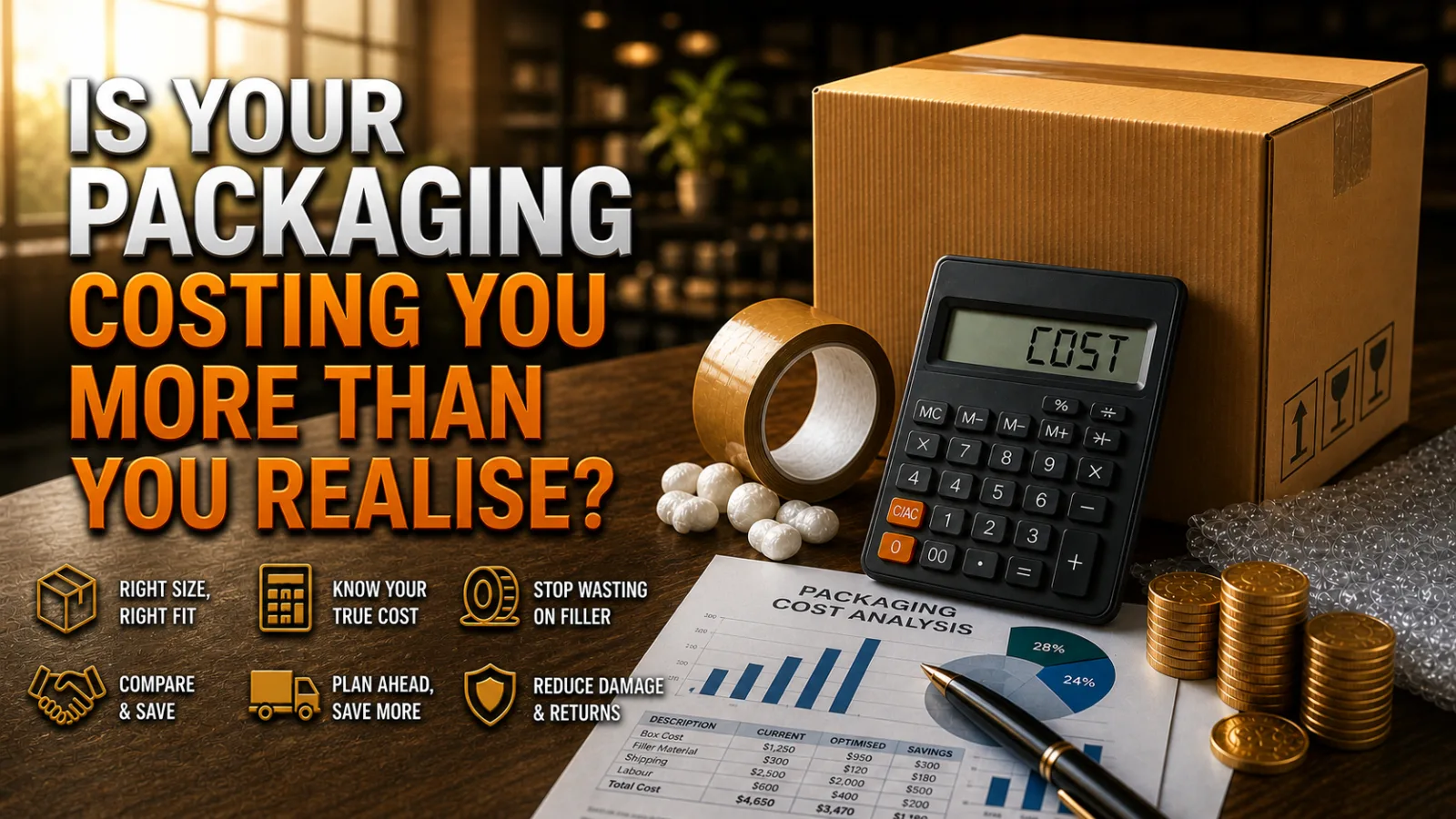
Here’s a question most businesses never actually sit down and work out properly: if you added up every rupee your packaging costs you, not just the box price, but everything around it, would the number surprise you?
Most business owners can tell you their rent, their staff salaries, their supplier payments down to the last detail. But packaging often sits in a strange blind spot. It feels small, routine, barely worth tracking closely. And that’s exactly why it quietly becomes one of the more expensive line items nobody’s actually looked at properly in a while.
Why This Cost Hides So Easily
Packaging spend rarely shows up as one big number. It’s spread across dozens of small purchases, a bit here for boxes, a bit there for tape, some for filler, occasionally for printing. Each individual purchase feels too small to question. But add them all up over a few months, and you’re often looking at a far bigger total than you’d have guessed if someone asked you to estimate it off the top of your head.
This is made worse by the fact that packaging costs tend to creep up gradually rather than jump suddenly. A slightly bigger box here, a bit more filler there, a supplier’s price that’s crept up 5% without anyone really noticing, none of these feel significant in the moment, but they compound.
Questions Worth Asking Yourself Honestly
Do You Actually Know Your Packaging Cost Per Order?
Not a rough guess, an actual number. If you can’t answer this fairly quickly, that’s worth sitting with. It’s hard to know if something’s costing you too much if you’ve never actually calculated what it’s costing you in the first place.
Are You Using the Same Box Size for Products That Don’t Need It?
This is one of the most common, and most expensive, habits businesses fall into without noticing. A box that worked for your first product sometimes just keeps getting used for everything else too, even as your product range has genuinely changed. Oversized boxes mean more material, more filler, and often higher shipping costs, all adding up silently.
How Much Are You Spending on Filler Because the Box Doesn’t Fit Well?
If you’re regularly stuffing in extra paper or bubble wrap to stop a product from rattling around, that’s a sign the box itself isn’t the right fit, and you’re paying for that mismatch twice, once in filler material, and again in the risk of damage anyway.
When Did You Last Compare Prices With Another Supplier?
If the honest answer is “years ago” or “never,” you genuinely don’t know whether your current pricing is still competitive. Suppliers rarely proactively lower prices on their own. Without the occasional comparison, it’s easy to end up paying more than the market rate simply out of habit.
Are You Ordering in Small, Frequent Batches Instead of Planning Ahead?
Frequent small orders almost always cost more per unit than a well-planned bulk order. If you’re placing packaging orders reactively, whenever you’re running low, rather than forecasting ahead, you’re likely missing out on meaningful bulk discounts.
How Much Are Damaged Returns Actually Costing You?
This one’s easy to overlook because it doesn’t show up as a “packaging cost” on paper, it shows up as a refund, a replacement, or a lost customer. But if weak or ill-fitting boxes and packaging are contributing to your damage rate, that cost belongs in the packaging conversation too, even if your accounting doesn’t currently categorise it that way.
A Simple Way to Actually Calculate This
If you want a real answer rather than a guess, here’s a basic way to work it out:
-
Add up your total packaging spend over the last three months, boxes, tape, filler, printing, everything.
-
Divide by your total number of orders shipped in that period. This gives you your actual cost per order.
-
Compare that number against what you assumed it was. Most business owners are surprised, usually on the higher side.
-
Factor in damage-related costs separately, refunds and replacements tied to packaging failures, and add that to your picture.
Once you have real numbers in front of you, it becomes much easier to see where the waste actually is, rather than guessing.
Common Places Money Quietly Leaks Out
- Oversized Boxes—Paying for cardboard and shipping weight you don’t actually need, simply because nobody revisited the box size after the product range changed.
- Excess Filler—Using more cushioning material than necessary because the box itself isn’t snug enough to begin with.
- Reactive, Small Orders—Missing out on bulk pricing by ordering frequently in small quantities instead of planning ahead for known demand.
- Outdated Supplier Pricing—Continuing to pay a rate that was fair a year or two ago, without ever checking if it’s still competitive today.
- Damage and Replacement Costs—Treating damaged deliveries as a separate, unrelated expense, rather than recognising them as a packaging cost in disguise.
What a Proper Review Usually Reveals
When businesses actually sit down and audit their packaging spend properly, a few patterns show up again and again. Box sizes that no longer match the current product range. Filler usage that’s higher than necessary because of poor box fit. Pricing that hasn’t been checked against the market in a long time. None of these are dramatic mistakes, they’re just small inefficiencies that nobody got around to fixing, simply because packaging never felt urgent enough to properly review.
The good news is that none of these are hard to fix once you actually see them clearly. Most businesses who do this exercise find savings without having to compromise on quality at all, they’re not cutting corners, they’re just cutting waste that was never actually helping anyone.
A Quick Self-Check
-
Do you know your actual packaging cost per order, or just a rough guess?
-
Are you still using the same box sizes you started with, even as your products changed?
-
Are you adding extra filler because the box itself doesn’t fit well?
-
When did you last get a comparison quote from another supplier?
-
Are you ordering reactively in small batches, or planning ahead for bulk savings?
-
Have you factored damage-related returns into your actual packaging cost?
If more than a couple of these make you pause, it’s probably worth a proper look.
Final Thoughts
Packaging rarely feels like a cost worth investigating closely, right up until someone actually does the maths and finds out it’s been quietly bigger than expected. The fix usually isn’t dramatic. It’s not about switching to cheap, weak boxes to save money, it’s about matching size, strength and quantity properly to what you’re actually shipping, instead of running on habits nobody’s revisited in a while.
If you want an honest look at whether your current packaging setup is costing more than it should, bring your numbers to Nirmal Packaging. Share your order volume and current box sizes, and the team can help you see exactly where the savings are, without compromising on the protection your products actually need.

Nirmal Packaging Industries
Est. 2011 • C-192, Sec-10, Noida — Manufacturer of corrugated boxes & industrial packaging solutions.