Eco-Friendly Packaging in India — Options, Cost & Why Businesses Are Switching
Eco-Friendly Packaging in India — Options, Cost & Why Businesses Are Switching
Published by Nirmal Packaging | Eco-Friendly Packaging Solutions for India
Let’s be honest — a few years ago, if you told a manufacturer in Haryana or a retailer in Delhi that they’d one day be paying close attention to the biodegradability of their packaging, they’d have laughed. Packaging was packaging. You wrap the product, ship it, done.
But something has shifted. And it’s shifted fast.
Today, from small e-commerce sellers in Karnal to large FMCG brands in Mumbai, businesses across India are asking questions they never used to ask: What happens to this box after my customer opens it? Can I switch to something greener without blowing my budget? Will my customers even notice?
The answers — and the real-world numbers behind them — are what this blog is about. We’ll walk you through every major eco-friendly packaging option available in India right now, break down the actual costs, and explain why more and more businesses are making the switch. And yes, we’ll also tell you how Nirmal Packaging can help you get there.
Why Is Everyone Suddenly Talking About Sustainable Packaging?
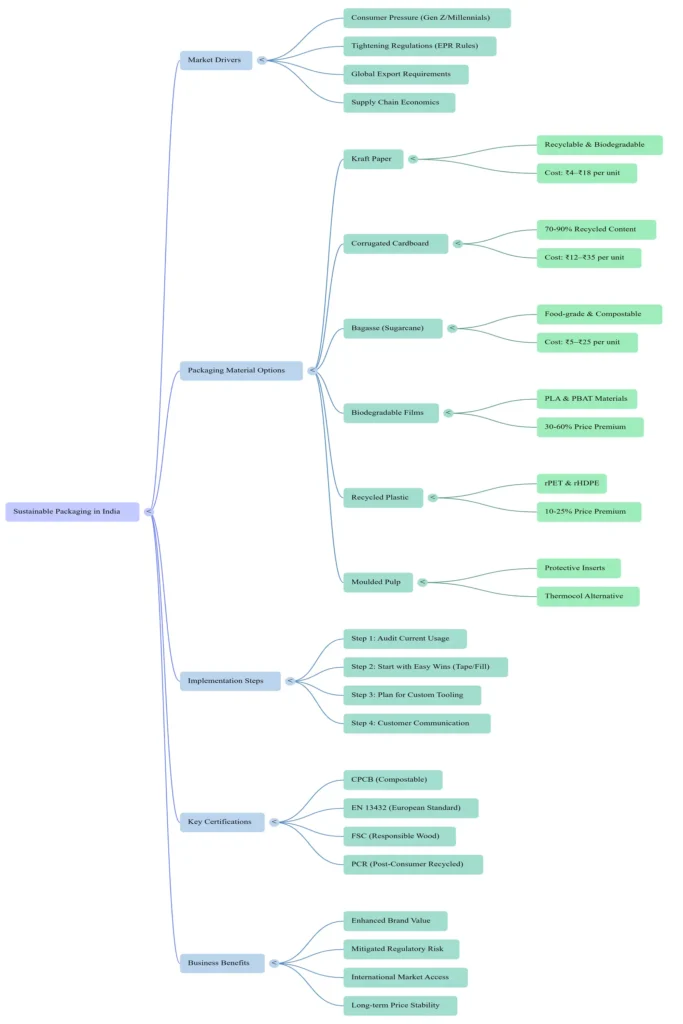
Before we get into the options and pricing, it’s worth understanding what’s driving this shift. It’s not just one thing — it’s a combination of factors that have hit India simultaneously.
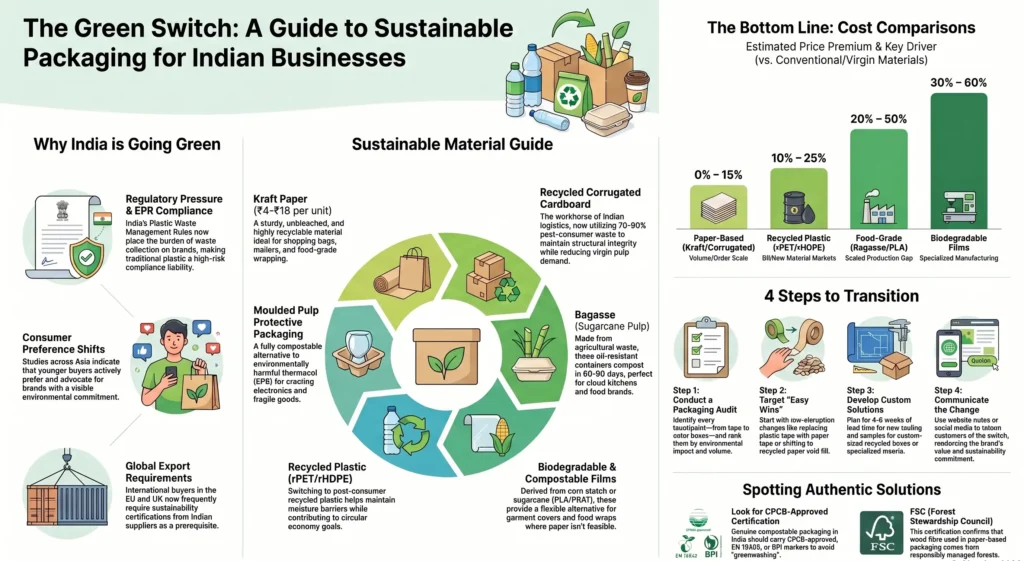
Consumer pressure is real. Studies from across Asia show that younger buyers — particularly millennials and Gen Z shoppers — actively prefer brands that take their environmental footprint seriously. If your packaging ends up in a river or a landfill in three hours, people are noticing. And they’re talking about it on social media.
Regulation is tightening. India’s Plastic Waste Management Rules have been amended multiple times, with extended producer responsibility (EPR) norms now placing the burden of waste collection on the brands themselves. Single-use plastic packaging bans have already rolled out in phases. If you’re still heavily dependent on traditional plastic packaging, you’re not just an environmental concern — you’re a compliance risk.
Supply chain realities. International buyers and export clients — especially those in the EU and the UK — are now asking for sustainability certifications from their Indian suppliers. If you want to do business globally, sustainable packaging is no longer optional.
And then there’s the simple economics of it. As raw material costs for virgin plastic have fluctuated wildly over the past three years, many businesses have discovered that switching to recycled or plant-based alternatives actually makes financial sense — especially at scale.
At Nirmal Packaging, we’ve been having these conversations with businesses across Haryana, Punjab, and Delhi-NCR for years now. Let us share what we’ve learned.
The Main Types of Eco-Friendly Packaging Available in India
There’s no single “eco-friendly packaging” — it’s an umbrella term covering a wide range of materials and formats. Here’s a clear breakdown of what’s actually available in the Indian market today.
1. Kraft Paper Packaging
Kraft paper is probably the most widely adopted eco-friendly packaging material in India right now. Made from wood pulp using the kraft process, it’s sturdy, recyclable, and has that natural, unbleached look that many brands — especially in food, wellness, and artisan goods — love.
Common uses: Shopping bags, mailer bags, food-grade wrapping, inner cushioning, paper tape.
Why it works: Kraft paper decomposes quickly, doesn’t require bleaching chemicals in its natural form, and can be recycled multiple times. It’s also widely available across India, which keeps logistics costs down.
Cost range: Kraft paper bags and boxes typically run between ₹4 to ₹18 per unit depending on size, thickness (GSM), and order volume. For e-commerce mailer bags specifically, bulk orders (5,000+ units) can bring the per-unit cost well under ₹10.
One of the things businesses love about kraft paper is how well it takes branding. Custom printing in 1-2 colours on kraft gives a premium, artisanal feel without requiring fancy coatings. If you’re a D2C brand or a retail store in Karnal, Panipat, or anywhere in the region, this is often the first switch we recommend.
2. Corrugated Cardboard (Recycled Content)
Corrugated boxes have always been the workhorse of Indian logistics. What’s changed is the shift toward boxes made with higher recycled content — often 70-90% post-consumer waste — and away from virgin fibre.
Common uses: Shipping boxes, product packaging, FMCG outer cartons, e-commerce dispatch boxes.
Why it works: Corrugated cardboard is already the most recycled packaging material in India. Moving to higher recycled content versions reduces the demand for virgin wood pulp while maintaining structural integrity.
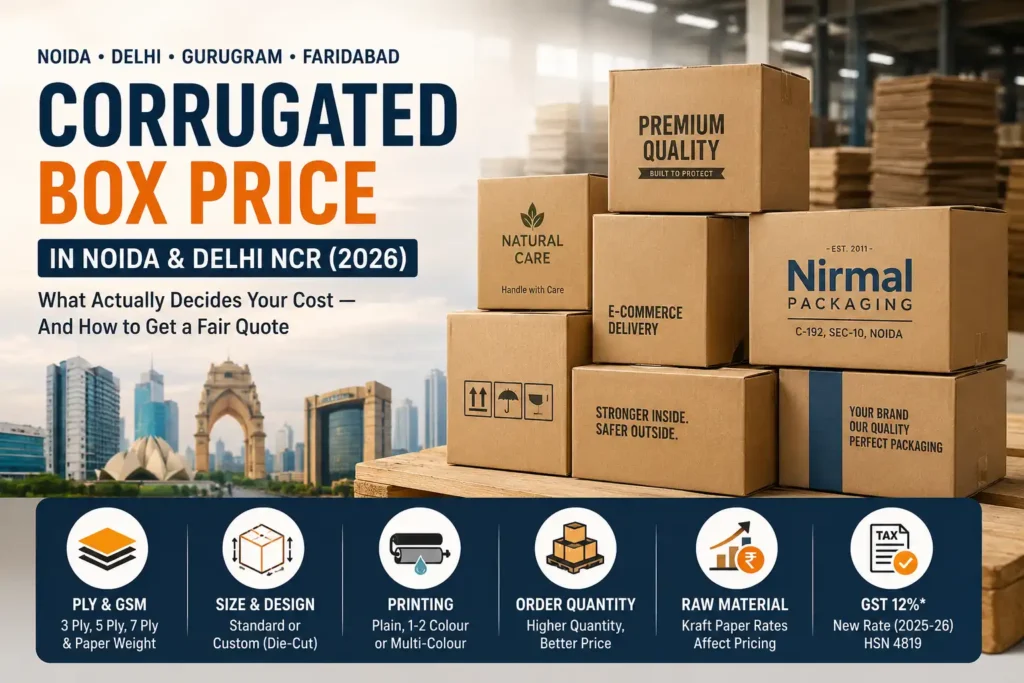
Cost range: Standard corrugated boxes (3-ply) for e-commerce start around ₹12–₹35 per unit. Custom-printed boxes with recycled content are slightly higher but still competitive with virgin fibre alternatives. At volume (10,000+ units), the cost difference between virgin and recycled content boxes is often less than ₹2–₹3 per box.
At Nirmal Packaging, we supply corrugated packaging solutions to businesses across Haryana and the broader North India market. If you’re currently using standard corrugated boxes and want to transition to higher recycled content, we can often do it within your existing budget.
3. Bagasse (Sugarcane Pulp) Packaging
This one surprises a lot of people. Bagasse is the fibrous residue left after sugarcane juice is extracted — effectively agricultural waste. It turns out to be an excellent raw material for moulded pulp packaging: food containers, plates, trays, and even some box formats.
Common uses: Food service containers, take-away trays, egg trays, disposable plates and bowls.
Why it works: India produces enormous quantities of sugarcane, making bagasse readily available. Products made from it are compostable within 60-90 days, and they’re naturally oil and water-resistant — making them genuinely useful for food businesses without needing plastic coatings.
Cost range: Bagasse containers typically cost ₹5–₹25 per unit depending on the format. They are slightly more expensive than comparable plastic or thermocol alternatives, but the gap has narrowed significantly as production has scaled up across India.
For restaurants, cloud kitchens, and food brands operating out of cities like Ambala, Sonipat, or Rohtak, bagasse packaging is a strong option — particularly if your customers are health-conscious or environmentally aware.
4. Biodegradable and Compostable Films
Not everything can be replaced with paper or cardboard — some products genuinely need flexible film packaging for freshness and protection. This is where biodegradable films come in.
Common uses: Inner wrapping for food, garment covers, shrink wraps, ziplock pouches.
Why it works: These films are typically made from PLA (polylactic acid, derived from corn starch or sugarcane) or PBAT (a biodegradable synthetic polymer). Certified compostable versions break down in industrial composting facilities.
Cost range: Biodegradable films cost roughly 30-60% more than conventional LDPE films. For a garment manufacturer in Panipat or Ludhiana currently spending ₹8 per unit on polybags, switching to biodegradable alternatives would bring the cost to approximately ₹12–₹14 per unit. The premium is real, but it’s decreasing as domestic production grows.
Important note: Look for certifications like EN 13432 (European standard), CPCB-approved compostability, or BPI certification when sourcing these films. Not all “biodegradable” labels in the market are reliable.
5. Recycled Plastic Packaging (rPET, rHDPE)
Sometimes fully replacing plastic isn’t feasible — especially for products that need moisture barriers or specific structural properties. In those cases, switching to packaging made from post-consumer recycled plastic (PCR) is a meaningful step forward.
Common uses: PET bottles, HDPE containers, flexible pouches with recycled content.
Why it works: Using recycled plastic reduces demand for virgin petroleum-based plastics and keeps material in the circular economy rather than in landfills.
Cost range: rPET and rHDPE packaging generally costs 10-25% more than virgin plastic equivalents, though prices fluctuate with oil prices and recycled material availability.
For businesses that aren’t ready for a full material switch, increasing recycled content is a practical interim step that still contributes to EPR compliance and sustainability reporting.
6. Moulded Pulp Packaging
Different from bagasse in that it can use a mix of recycled paper/newsprint along with natural fibres, moulded pulp packaging is excellent for protective inserts — the kind that cradle electronics, glass bottles, or fragile items in shipping boxes.
Common uses: Protective inserts, egg cartons, electronics packaging, bottle carriers.
Why it works: It’s made from waste paper, requires no adhesives or coatings to function, and is fully recyclable and compostable. For brands replacing thermocol (EPS) inserts — which are among the most environmentally problematic packaging materials — moulded pulp is the go-to alternative.
Cost range: Moulded pulp inserts cost more than thermocol in small quantities but reach price parity at volumes of roughly 20,000 units and above. For high-value products where packaging is part of the brand experience, the unboxing experience moulded pulp provides often justifies the cost anyway.
Real Talk: How Much More Does Eco-Friendly Packaging Actually Cost?
This is the question every business owner asks, and it deserves a straight answer.
For paper-based packaging (kraft, corrugated): The cost difference compared to conventional alternatives is minimal — often 0-15% — especially at scale. In some cases, kraft paper alternatives are actually cheaper than plastic laminated options once you factor in printing costs.
For food-grade biodegradable packaging (bagasse, PLA): Expect a 20-50% premium over traditional plastic or thermocol. This is the category where the cost gap is most noticeable.
For biodegradable films: 30-60% more than conventional LDPE/BOPP, currently. This gap is shrinking year by year.
For recycled plastic content: 10-25% premium, depending on the material and market conditions.
Here’s the thing though: these numbers need to be weighed against a few other factors that are harder to quantify but very real —
- Brand value. Customers do pay a premium for brands they perceive as responsible. That 15% packaging cost increase can be more than recovered if it supports a premium positioning.
- Regulatory risk. Non-compliance with plastic waste rules can result in fines, bans, or being excluded from tenders. The cost of switching now is lower than the cost of scrambling later.
- Export opportunity. If you’re eyeing international buyers, sustainable packaging is often a prerequisite, not a differentiator.
- Long-term pricing trends. The cost of eco-friendly packaging has been falling consistently as Indian production capacity increases. Early movers lock in supplier relationships and pricing before demand spikes further.
Why Businesses in India Are Actually Making the Switch
We talk to dozens of businesses every month at Nirmal Packaging, and the reasons they give for switching aren’t all noble environmental ones. They’re practical. Here are the most common ones we hear:
“Our export buyer asked for it.” A textile manufacturer in Panipat had to shift to kraft paper packaging for their EU orders. Didn’t have a choice — and ended up liking the results.
“Our customers started asking questions.” A spice brand in Delhi noticed customer reviews commenting on the plastic packaging. Switched to kraft paper pouches. The response was immediate and positive.
“The EPR deadline spooked us.” A cosmetics brand realised their current packaging would put them in non-compliance. Came to us to redesign their packaging architecture before the deadline hit.
“We rebranded and wanted the packaging to match.” A D2C skincare brand in Gurugram went through a brand refresh and used it as an opportunity to go fully sustainable across their packaging line.
“Our competition switched and we didn’t want to be left behind.” Classic — but valid.
Whatever the reason, the businesses that switch rarely switch back.
How to Get Started Without Overwhelming Your Operations
Making a full packaging switch overnight isn’t realistic for most businesses — and it isn’t necessary. Here’s a phased approach we typically recommend:
Step 1: Audit what you’re currently using. List every packaging touchpoint — outer boxes, inner wrapping, void fill, tape, labels. Identify which items have the highest volume and the highest environmental impact.
Step 2: Start with the easiest wins. Switching from plastic tape to paper tape, from plastic void fill to recycled paper crumple, or from plastic mailer bags to kraft mailer bags — these are low-cost, low-disruption changes that deliver visible results quickly.
Step 3: Tackle the bigger items with proper lead time. Custom boxes and specialised packaging need development time. Plan 4-6 weeks for new tooling and samples.
Step 4: Communicate it to your customers. Don’t make the switch silently. A small note inside the package, a mention on your website or social media — customers appreciate knowing, and it reinforces the value of your investment.
At Nirmal Packaging, we work with businesses at every stage of this journey. Whether you’re starting from scratch or looking to switch one specific component of your packaging line, our team can help you find the right solution for your product type, volume, and budget.
A Word on Certifications and Claims
The eco-friendly packaging space in India has its share of misleading claims. “Biodegradable” can mean almost anything without a certification to back it up. Here’s what to look for:
- For compostable packaging: CPCB-approved certification, EN 13432, or BPI certification are the most credible markers.
- For recycled content: Ask for the percentage and type of recycled input. Post-consumer recycled (PCR) content is more valuable than post-industrial recycled.
- For paper-based packaging: FSC (Forest Stewardship Council) certification confirms that virgin wood fibre comes from responsibly managed forests.
When you work with us at Nirmal Packaging, we’re transparent about what our materials are and where they come from. We’d rather tell you what something actually is than oversell it with vague green claims.
Frequently Asked Questions
Is eco-friendly packaging strong enough for heavy products? Yes. Corrugated cardboard solutions with recycled content can handle significant weight and are routinely used for industrial and FMCG applications. For very heavy items, we can increase the ply count and wall thickness accordingly.
Can I get eco-friendly packaging custom-printed with my logo? Absolutely. Kraft paper, corrugated boxes, and most biodegradable film options take printing well. Water-based and soy-based inks are available for a fully sustainable print solution.
What’s the minimum order quantity for custom eco-friendly packaging? This varies by product. For kraft paper bags and mailers, MOQs typically start at 500-1,000 units. For custom-printed corrugated boxes, MOQs are usually 1,000-3,000 units. Get in touch with us directly and we’ll give you specific numbers.
Does eco-friendly packaging affect shelf life for food products? It can, if not chosen carefully. Bagasse containers are naturally moisture-resistant; kraft paper can be coated with food-safe coatings or PE-lined for additional protection. We help food businesses select the right specification for their product’s specific needs.
Can businesses in smaller cities like Karnal, Panipat, or Ambala access eco-friendly packaging easily? Yes. We supply across Haryana and the Delhi-NCR corridor. Delivery timelines and logistics for businesses in Karnal, Panipat, Rohtak, Sonipat, Ambala, and surrounding areas are well within our regular distribution network. Contact us for specific delivery terms.
Final Thoughts
The shift to eco-friendly packaging in India isn’t a trend that’s going to fade. It’s structural — driven by regulation, consumer expectation, and the basic reality that the planet can’t absorb infinite plastic waste.
But it also doesn’t have to be complicated, expensive, or disruptive. With the right partner and a sensible approach, most businesses can make meaningful progress on their packaging sustainability without breaking their cost structures.
At Nirmal Packaging, this is exactly what we do — help businesses across Haryana, Punjab, Delhi-NCR, and beyond find packaging solutions that work practically and responsibly.
If you’re ready to explore what eco-friendly packaging could look like for your business, we’d love to talk.
Explore our packaging solutions or get in touch with our team today.
Nirmal Packaging — Sustainable Packaging Solutions for Businesses Across India Serving Karnal, Panipat, Sonipat, Rohtak, Ambala, Delhi-NCR, and beyond